Sage Green Rose Toile: A Pattern for Timeless Design
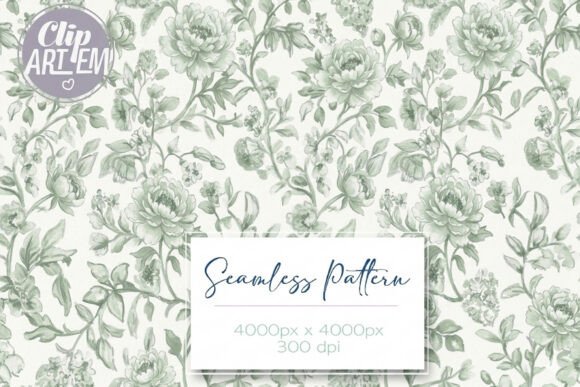
There’s a certain quiet confidence in a design that doesn’t shout for attention but commands it nonetheless. The Sage Green Rose Toile Seamless Pattern is exactly that kind of design element. It’s not a fleeting trend or a loud graphic; it’s a classic visual language, reinterpreted with a fresh, contemporary color story. Imagine the intricate, hand-drawn botanical scenes of traditional toile de jouy, but rendered in a soothing palette of sage green and soft cream. This combination offers a bridge between vintage elegance and modern minimalism, making it a versatile asset for creators who value sophistication and subtlety in their work.
The Allure of a Modern Chinoiserie Aesthetic
What makes this particular seamless pattern so visually compelling? It starts with the inherent charm of its inspiration. Toile patterns, often featuring pastoral scenes or intricate florals, have an air of narrative and artistry. The Sage Green Toile Seamless Pattern Rose captures this hand-illustrated feel, with delicate rose motifs and botanical elements that feel curated, not mass-produced. The color choice is where the modern twist happens. Sage green is a color of balance and renewal, evoking nature and calm. Paired with a warm cream instead of stark white, it feels more approachable and organic. This isn't just a digital paper; it's a mood board in a single file. The high-resolution, seamless tile format means you can scale it for a tiny logo or a full wall mural without losing an ounce of its crisp, detailed quality.
From Digital File to Tangible Brand Identity
For a designer or small business owner, a pattern like this is more than decoration—it's a foundational element of a visual identity. Consistency is the bedrock of brand recognition, and a signature pattern can be woven through every customer touchpoint. Think beyond a simple website background. This elegant rose floral digital paper can define the texture of your brand's world.
- Packaging & Presentation: A luxury candle brand could use this as the inner lining of its boxes or the background on its labels. A boutique bakery might wrap its pastry boxes in custom-printed paper featuring the toile. It instantly communicates quality and attention to detail.
- Editorial & Content Design: For bloggers, magazines, or content creators, this pattern serves as a stunning, non-distracting backdrop for text-heavy layouts. Use it as a border for a newsletter, a header graphic for a blog post about interior design, or a styled background for flat-lay photography of beauty products or stationery.
- Physical Products & Merchandise: The commercial license opens up a world of possibilities. Imagine this chinoiserie wallpaper design on a line of throw pillows, tote bags, or silk scarves. It’s perfect for stationery lines—think journals, planners, wedding invitation suites, and luxury gift wrap. The pattern’s repeat ensures seamless production on any scale.
Practical Applications Across the Creative Spectrum
The true value of a premium design asset lies in its adaptability. This sage green and cream toile is a workhorse that can shift its personality depending on the context and the typography you pair with it. Let's explore how it can serve different project goals.
In logo design, you wouldn't use the full pattern as the logo itself, but it can inspire the aesthetic. A designer might extract a single rose motif from the pattern to create a unique icon, or use the pattern as a background fill within a circular logo frame. For social media graphics, it’s a game-changer. Create a series of Instagram Story templates or Pinterest pins with a consistent, branded background that feels both professional and inviting. The pattern adds depth and interest without competing with your message.
When it comes to web design, think strategically. A full-page background might be overwhelming, but using the pattern in a header, footer, or as a featured section background can break up the page and guide the user's eye. For print materials like posters, business cards, or event programs, it adds a layer of texture and luxury that plain paper or solid colors cannot achieve. The key is to use it as a supporting actor, not the main star, allowing your core content—be it a headline, a product image, or a call-to-action—to remain the focal point.
Integrating the Pattern: Tips for Visual Harmony
Introducing a strong pattern into a design requires a thoughtful approach to maintain balance and readability. The goal is to enhance, not overwhelm.
- Pair with Restraint: This is a detailed pattern, so pair it with clean, simple elements. For typography, a clean sans-serif font for body text will ensure readability against the patterned background. A elegant serif or a subtle script font can be used for headlines to complement the vintage feel. Avoid pairing it with other highly decorative fonts or busy graphics.
- Use Strategic Solid Colors: Pull colors from the pattern—sage green, cream, or a deep charcoal from the illustration lines—to use for text, buttons, or solid color blocks. This creates a cohesive palette and gives the eye a place to rest.
- Layer with Purpose: Don't just slap the pattern onto a canvas. Use it as a background layer and place solid-colored shapes (like rectangles or circles) on top to create "windows" for your content. This technique is fundamental in both web and print design to ensure legibility.
- Scale for Impact: Experiment with the scale of the pattern. Zooming in on a section can create an abstract, textural look. Using it at a smaller scale makes the overall design more subtle and uniform.
Before finalizing any project, always test your designs in the intended environment. View a website mockup on a phone screen. Print a proof of a business card. Check how the pattern looks when tiled across a large surface like a textile print. This practical review ensures your vision translates perfectly from screen to reality.
Ultimately, the Sage Green Rose Toile Seamless Pattern is a design asset that offers both beauty and function. It provides a shortcut to a sophisticated, curated aesthetic that resonates with audiences who appreciate craftsmanship and timeless style. By understanding its visual personality and applying it with intention, you can transform ordinary projects into memorable experiences, building a brand world that feels cohesive, professional, and deeply engaging.